
Amino Acids in Poultry Feed: Why Balance Matters
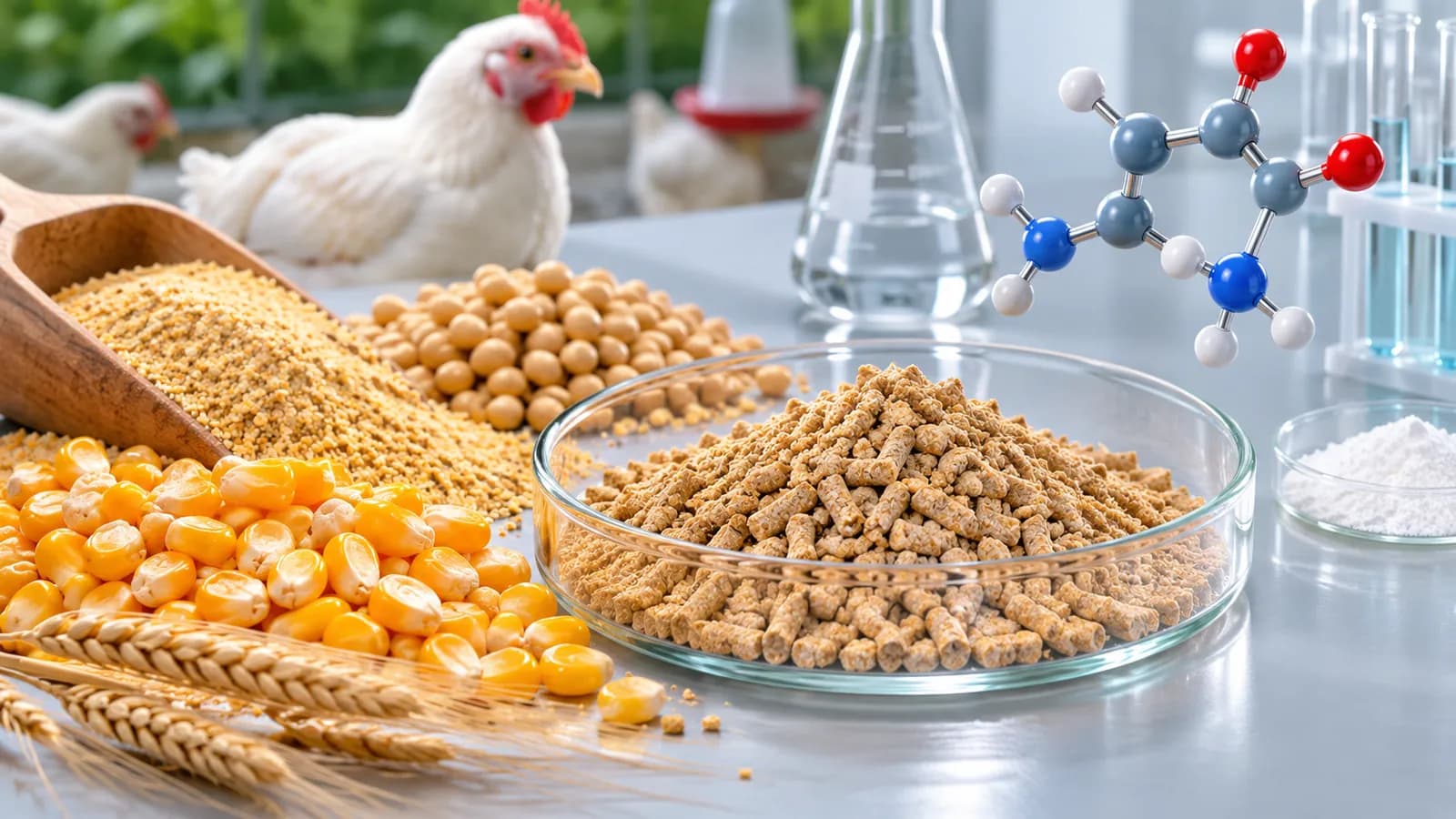
Protein is an important part of poultry nutrition, but a feed’s crude protein percentage does not tell the whole story. Birds need individual amino acids in suitable amounts to build and maintain body tissues, support feather development and produce eggs. A formulation can contain substantial crude protein yet still fall short in an amino acid that limits the bird’s ability to use the rest of the diet.
Essential and Limiting Amino Acids
Poultry must obtain essential amino acids through their diet because they cannot produce enough of them to meet their needs. Methionine, lysine and threonine are among the amino acids commonly considered when formulating practical poultry feeds.
A limiting amino acid is one supplied in the shortest amount relative to the bird’s requirement. If that limitation is not corrected, simply adding more of another amino acid will not create a balanced supply. The limiting amino acid depends on the ingredients, their inclusion levels and the nutritional target of the formulation.
Why Ingredient Quality Matters
Two ingredients with similar crude protein values may supply different amounts of individual amino acids. Processing and ingredient quality can also influence how much of that supply is digestible. Formulation should therefore consider reliable ingredient composition and digestibility data, rather than relying on crude protein alone.
Feed-grade amino acids can help a nutritionist correct specific gaps in a formulation. Used appropriately, they may also provide flexibility in selecting protein ingredients. However, reducing crude protein requires care: the diet must still supply adequate essential amino acids, nitrogen for the synthesis of other amino acids, energy and the remaining nutrients.
Matching the Diet to the Bird
Amino-acid needs change with genetics, age, feed intake and production purpose. A broiler diet and a laying-hen diet should not be expected to have the same specification. Heat stress or other conditions that reduce feed intake may also affect the amount of each nutrient consumed per bird per day.
Practical Takeaway
Start with the bird’s nutritional requirements, assess the amino-acid contribution of the ingredients, and correct demonstrated shortfalls. Balanced amino-acid nutrition is a formulation task—not a reason to assume that adding more of one supplement will always improve performance.